Water Pump Services in Dallas, OR
Keeping Your Well Water Flowing With Dependable Pumping Solutions
When your property depends on a private well, having a reliable water pump isn't just a convenience. It's a necessity. Your pump is responsible for moving groundwater into your home's plumbing system, providing the water you use for cooking, cleaning, bathing, laundry, and everything else that makes daily life possible. When the equipment isn't working properly, even a relatively small problem can become a major disruption.
For property owners in Dallas, Oregon, and throughout Polk County, maintaining a dependable well water system starts with having the right equipment for the job. At Mack Drilling Company Inc, we understand the important relationship between a well and its pumping system. As a well drilling contractor, we recognize that water availability, well construction, pumping capacity, and the property's overall water requirements all need to be considered when evaluating a water system.
Not every well operates under the same conditions, and not every property has the same water demands. A home on a smaller residential lot may have very different requirements than a rural property with livestock, irrigation, or multiple buildings. Having pumping equipment suited to those needs is an important part of maintaining a consistent water supply.
Whether you're planning a new well system, experiencing problems with your current pump, or considering replacement equipment, Mack Drilling Company Inc is a resource for discussing your water pump needs.
A Water Pump Has a Bigger Job Than You Might Think
It's easy to forget about your well pump when everything is working as it should. You turn on the kitchen faucet, take a shower, or start a load of laundry without giving much thought to how the water gets there. Behind the scenes, however, your pump is doing the work of moving water from underground and delivering it throughout your property.
The type of pump used depends largely on the well's construction and depth. Submersible pumps are commonly installed in deeper wells, where the pump sits below the water level and pushes water upward through the discharge piping. Other wells may use jet pumps installed above ground, depending on the depth and configuration of the water source.
Choosing the right equipment involves looking at more than just the pump itself. The well's pumping level, available water supply, required flow rate, and pressure requirements all influence what type of system is appropriate.
For example, a pump needs enough capacity to meet the property's water demands without being oversized for the well. If the equipment is not properly matched, it may struggle to maintain pressure, cycle too frequently, or place unnecessary strain on the system.
A properly planned pumping system takes these factors into account from the beginning.
Recognizing the Signs of a Well Pump Problem
Most homeowners don't spend much time thinking about their well pump until something changes. Maybe the water pressure isn't as strong as it used to be, or perhaps the pump seems to be running more often than normal. These changes can be early indications that something within the water system needs attention.
Some pump-related problems develop slowly, while others can cause an immediate interruption to your water supply. Knowing what to look for can help you recognize when it's time to have the system evaluated.
Common warning signs include:
- Water Pressure That Keeps Dropping: If water pressure has become noticeably weaker throughout your home, the pump may not be delivering water as effectively as it should. Other components, including pressure controls and plumbing, may also be involved.
- A Pump That Runs Continuously: A pump that doesn't shut off normally may be struggling to reach the required pressure. This can place additional strain on the equipment.
- Frequent On-and-Off Cycling: When a pump repeatedly starts and stops, it may indicate a pressure tank problem, incorrect pressure settings, or another issue within the system.
- Unexpected Changes in Water Flow: Water that sputters, slows down, or becomes inconsistent can have several possible causes, including pump or well-related problems.
- Unusual Sounds or Vibrations: New humming, clicking, or grinding noises may indicate mechanical or electrical trouble.
- Complete Loss of Water: When the faucets stop producing water, the problem could involve the pump, power supply, pressure switch, water level, or another part of the well system.
The important thing is not to assume that every water problem requires a new pump. A well water system has several components that work together, and the source of the problem needs to be understood before deciding what should be done.
Choosing Between Well Pump Repair and Replacement
When a well pump starts experiencing problems, property owners naturally want to know whether the equipment can be repaired or if replacement is necessary. The answer depends on the condition of the pump, the nature of the problem, and the overall age and performance of the system.
Some issues may involve components outside the pump itself. A pressure switch, electrical connection, control box, or pressure tank can cause symptoms that resemble pump failure. Identifying these possibilities is important before making decisions about replacement.
However, pumps do eventually wear out. Internal components experience regular mechanical stress, and operating conditions can affect the equipment's useful life. If a pump has become unreliable or can no longer meet the property's water demands, replacing it may be the more practical long-term option.
When considering replacement, proper sizing is especially important. The pump needs to deliver an appropriate flow rate while accounting for the well's depth, pumping water level, and the pressure needed throughout the property. Simply installing a larger pump doesn't necessarily mean better performance.
A well-designed system should work with the characteristics of the well and provide the water delivery needed for its intended use.
Understanding Pressure Tanks and Well Water Systems
A water pump is only one part of the equipment responsible for delivering water throughout your property. The pressure tank and pressure switch also have important jobs, and problems with either component can affect the way your system operates.
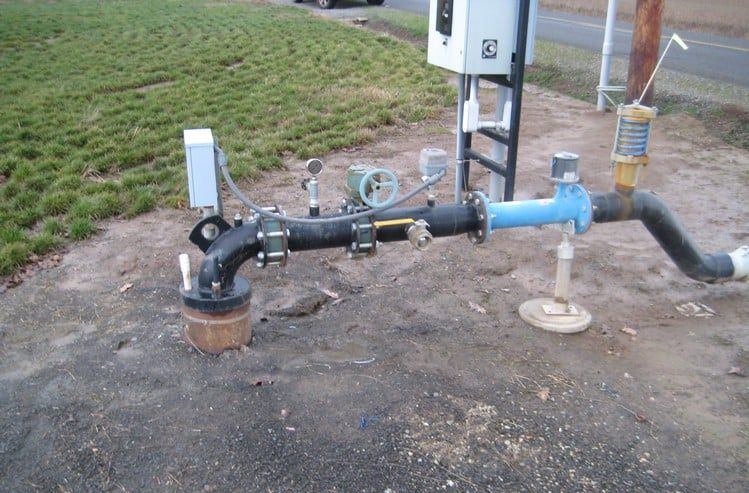
The pressure tank maintains a reserve of pressurized water, allowing your plumbing fixtures to receive water without requiring the pump to start every time someone opens a faucet. As water is used and system pressure drops, the pressure switch signals the pump to turn on. Once the system reaches its designated shutoff pressure, the pump stops.
When these components work together correctly, they help maintain consistent water pressure while limiting unnecessary pump operation.
Problems can develop when a pressure tank loses its proper air charge, an internal bladder fails, or a pressure switch stops responding correctly. You might notice rapid cycling, fluctuating pressure, or a pump that runs longer than expected.
Understanding these connections is important when evaluating a water pump system. A problem that appears to involve the pump may actually originate somewhere else. Looking at the complete setup helps avoid overlooking issues that could continue affecting the system after a pump replacement.
Water Pump Needs Around Dallas and Polk County
Dallas is located in west-central Oregon and serves as the county seat of Polk County. The surrounding landscape offers a mixture of valley farmland, rolling hills, rural residential properties, and foothills that gradually rise toward the Coast Range. This variety creates different conditions for property owners who depend on private wells.
The geology beneath the Dallas area is particularly interesting from a groundwater perspective. According to U.S. Geological Survey research on the Dallas-Monmouth area, the region includes older consolidated formations such as marine sandstone, siltstone, shale, volcanic tuff, basalt, and gabbro. In lower-lying areas, these formations can be covered by deposits of clay, silt, sand, and gravel.
These differences matter because groundwater doesn't move through every formation in the same way. Some deposits allow water to move more readily, while other formations may provide more limited groundwater yields. Conditions can vary between properties, making it important to consider the characteristics of an individual well rather than assuming that nearby wells will perform identically.
For rural property owners outside the developed portions of Dallas, dependable pumping equipment can be particularly important. Properties near Rickreall, Perrydale, Monmouth, and Falls City may have different well depths, water requirements, and groundwater conditions depending on their location.
Seasonal changes are another consideration in the Willamette Valley. Oregon's wetter months generally occur during the fall and winter, while summers tend to be considerably drier. For properties with irrigation or outdoor water demands, this seasonal difference makes it worthwhile to understand how the well and pump perform during periods of higher water usage.
The right pumping setup should account for the well's actual capabilities and the demands placed on it throughout the year.
Don't Overlook the Importance of Proper Pump Sizing
One of the most important parts of planning a well water system is making sure the pump is appropriate for the job. A system that works for one property may not be suitable for another, even if the two wells have similar depths.
Pump sizing involves several factors, including:
- Well Depth: The depth of the well and the pumping water level influence the amount of work required to bring water to the surface.
- Flow Rate: The pump must be capable of supplying an appropriate volume of water for the property's needs.
- Water Pressure: The system needs to provide adequate pressure for plumbing fixtures and other connected equipment.
- Water Demand: Household size, irrigation, livestock, and additional buildings can all influence pumping requirements.
- Well Production: The pump should be matched to the well's ability to provide water rather than selected based on horsepower alone.
Taking these details into consideration helps support a more balanced system. A pump that is poorly matched to the well can create unnecessary operating problems and may shorten the life of the equipment.
Contact Mack Drilling Company Inc for Water Pump Services in Dallas, OR
Your private well is an important investment, and the pumping equipment that supplies your water deserves careful consideration. Whether you're experiencing changes in water pressure, dealing with an unreliable pump, or planning the equipment for a new well, understanding your options is the first step toward a dependable water system.
Mack Drilling Company Inc serves property owners in Dallas, OR, and surrounding Polk County communities. As a well drilling contractor, we understand that dependable water delivery starts with a well and pumping system that are suited to the property.
If you have questions about your well pump, need to discuss your water system, or are considering your options for pumping equipment, contact Mack Drilling Company Inc. We're here to help you take the next step toward reliable well water for your home or property.